





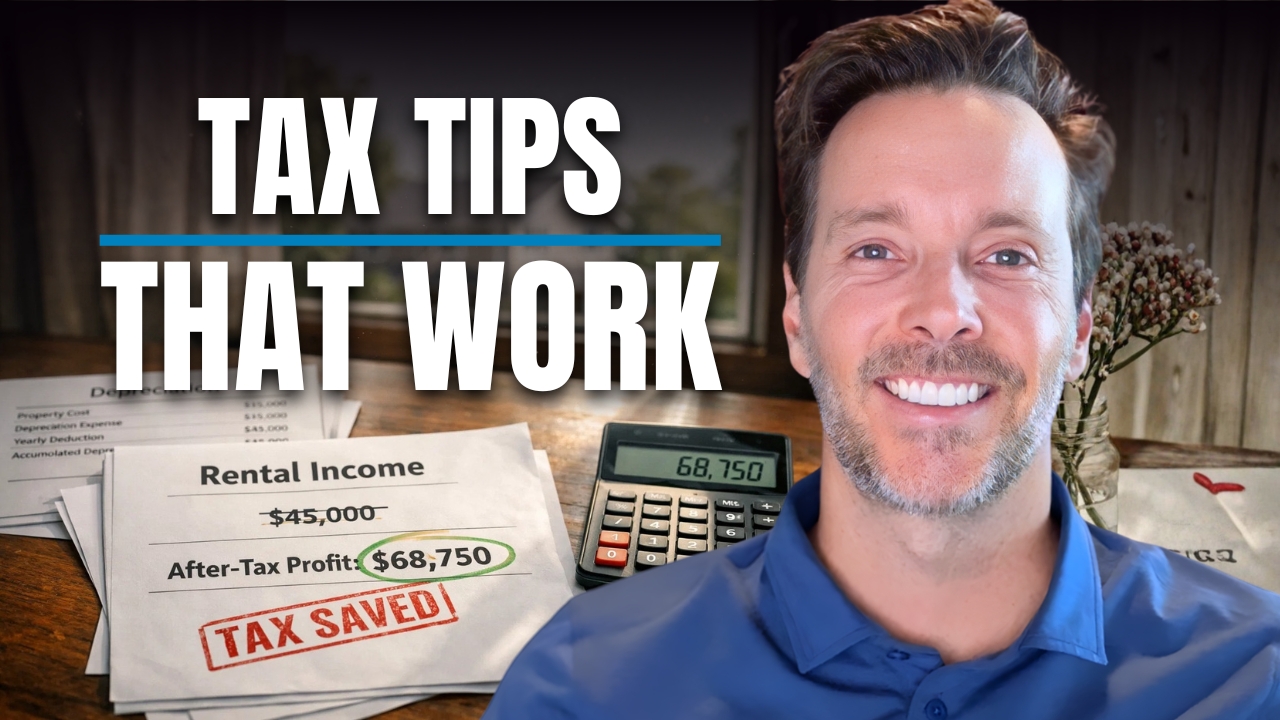
Taxes can make a big difference in your rental income when handled strategically with good record-keeping.
Have you ever wondered how some rental property owners seem to make so much more money than others? I’ve always been fascinated by this, and one of the biggest reasons comes down to taxes.
Most people only look at how much they earn before taxes, but if you start thinking about your after-tax returns, rental properties really shine.
Understanding taxes and depreciation can make a huge difference in how much money you actually take home, and that’s what I want to break down here.
The importance of record-keeping. One of the first things you need to do to maximize your rental income is keep excellent records. This isn’t just about April when tax season hits—it’s a year-round process.
If you’re working with a property management company, they should provide a detailed statement at the end of the year that breaks down everything about management fees, repairs, and capital expenditures.
These are all things you can deduct from your income, and keeping these records organized is critical. If your property management company isn’t organized, that’s a red flag. Make sure they give you proper documentation.
When you buy a property, it naturally depreciates over time, and this can actually increase your after-tax rate of return. Depreciation might seem small, but when calculated correctly, it makes your money work harder.
The important thing is to work with a CPA or financial advisor. They handle the details and make sure everything is applied properly. This applies to both residential and commercial properties, so it’s a strategy every investor should consider.
"When you buy a property, it naturally depreciates over time, and this can actually increase your after-tax rate of return."
Cost depreciation strategy. If you’re looking to take it a step further, there’s something called cost depreciation, where different parts of the property can be depreciated separately.
I don’t use this for every property, but it can be very effective if you’re buying multiple homes at the same time. It’s a way to accelerate depreciation on certain components and capture more tax benefits faster. Again, this is something to discuss with your CPA, especially if you have a portfolio of properties.
When you combine good record keeping with smart use of depreciation, your rental properties can generate a much higher after-tax return. That’s what really sets rental property investments apart from other types of investments. Planning for taxes isn’t just about avoiding problems, but about making your investments perform at their best.
Taxes are a year-round priority for rental property owners. If you need help or have questions, you can call (210) 802-9959 or email info@peaceofmind.co. I’ll help you keep your finances organized, take advantage of tax benefits, and protect your income.